Understanding the Light Path
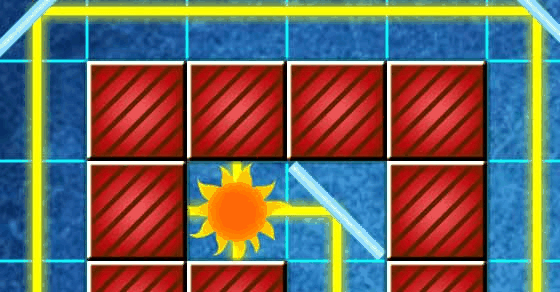
At the heart of Prism Path Puzzle Challenge is the simple but deep concept of redirecting a beam of light. Players place reflective surfaces on a grid to change the direction of sunlight. Each mirror rotates the beam by a fixed angle, so every placement must be considered in relation to the source and the target prism. The challenge grows as players learn to predict how multiple reflections will interact with walls and other obstacles.
Level Design and Obstacles
Each puzzle presents a fresh layout with its own set of barriers. Early levels offer straightforward paths, but later stages introduce elements like moving barriers or multiple light sources. The player must adapt their strategy to each unique configuration. There is no time limit, so the focus remains on thoughtful analysis rather than speed.
Building Spatial Reasoning
Success in this game depends on a player's ability to visualize how light travels and bounces. By experimenting with mirror placements, players develop a stronger intuition for geometry and angles. The game serves as a gentle introduction to basic physics concepts without feeling like a lesson. Each solved puzzle reinforces the player's understanding of cause and effect.
Visual Style and Atmosphere
The game uses bright, clear colors to make the light beam and mirrors stand out against the background. The interface is uncluttered, allowing players to focus on the puzzle. Animations are smooth and satisfying, especially when the light finally reaches the prism and creates a burst of color. The overall tone is calm and encouraging.
Progression and Difficulty Curve
Prism Path Puzzle Challenge gradually increases in difficulty, ensuring that players are never overwhelmed. New mechanics are introduced one at a time, giving players a chance to master each before moving on. This pacing keeps the game accessible for younger players while still offering enough complexity for adults. The sense of accomplishment grows with each completed stage.






Comments
0 comments