Core Challenge
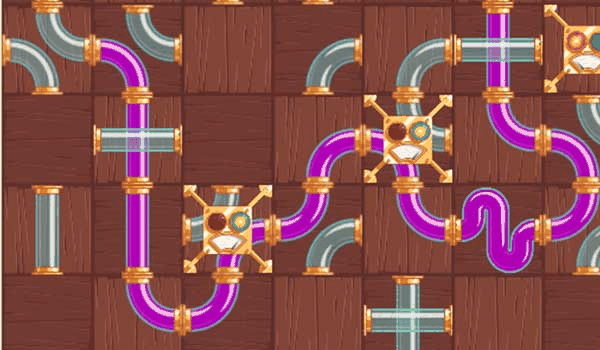
Flow Path Logic Puzzle presents a deceptively simple task: connect two points using a series of tube pieces so that liquid can travel without leaking. Each piece must be oriented correctly, and gaps cause failures. The game encourages players to think beyond the most direct route, as longer, winding paths yield extra stars. This mechanic transforms each level into a puzzle of efficiency versus creativity.
Level Progression
Early stages introduce basic layouts with few pieces, allowing newcomers to grasp the mechanics. As players advance, boards become more crowded, and available tube types shift. Some levels require multiple branches or careful backtracking. The difficulty curve is gentle but persistent, ensuring that each new stage feels like a fresh challenge rather than a repetition of previous patterns.
Visual and Interaction Design
The interface uses bright, distinct colors for different tube types, making it easy to identify connections at a glance. Touch and mouse controls respond smoothly, with clear feedback when a piece snaps into place or when a misalignment causes a leak. The clean visual style reduces clutter, letting players focus on the puzzle without distraction.
Reward Structure
Beyond simply completing each level, players earn up to three stars based on the path length. This system encourages experimentation: a longer, more convoluted route may yield a higher score than a straightforward one. Replaying earlier levels to improve star ratings adds longevity, as players refine their strategies and discover more efficient or more creative solutions.
Tips for Mastery
Before placing any piece, survey the entire board to identify potential bottlenecks. Consider the direction of flow and plan moves several steps ahead. If a layout seems impossible, try a different starting point or a more winding approach. Practice on simpler puzzles to build confidence, then apply those lessons to more complex configurations.









Comments
0 comments